
Experimenting with Microparades in Waterloo Park
Hannah Gardiner
Waterloo, Ontario
Hannah’s project brings back some nostalgia in the community through parades. She brought excitement and opportunities to experiment through several micro-parades. These events included bubble parades, lantern processions, and open-air karaoke; she continually challenged herself to learn from her project and host dynamic, audience-participatory events. Her project encouraged wider programming in the park and community, and she quickly became an advocate in the Waterloo region.
A Year of Small Parades, Big Moments of Community Magic
Hannah conceptualized her project as a nostalgic return to an enduring community ritual: parades. Building on her previous project, the MacGregor-Albert Giraffe Parade, organized by neighbours in memory of Dr. Anne Innis Dagg, Hannah wanted to continue exploring ways to bring people together in Waterloo Park. Although she had initially planned a single micro-parade project, Hannah decided to experiment with hosting several small ones.
An experimental repertoire that offered a few chances to see what worked, what didn’t, and what the barriers to small cultural programming were.
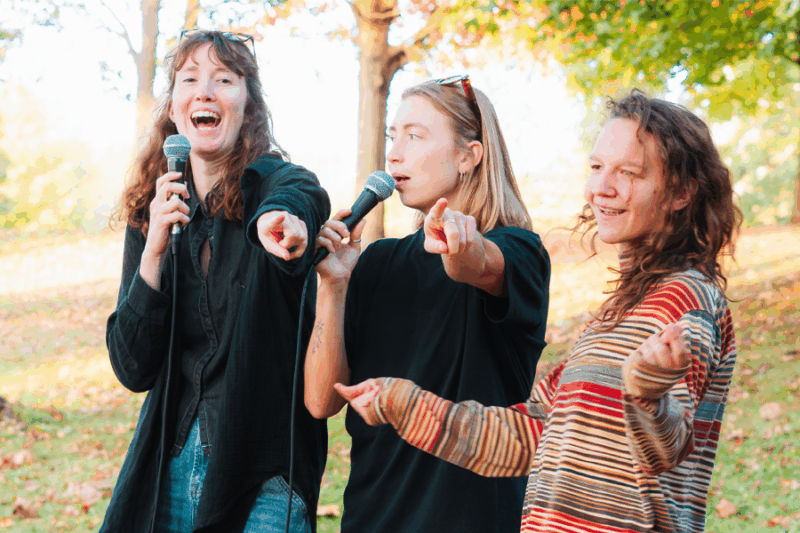
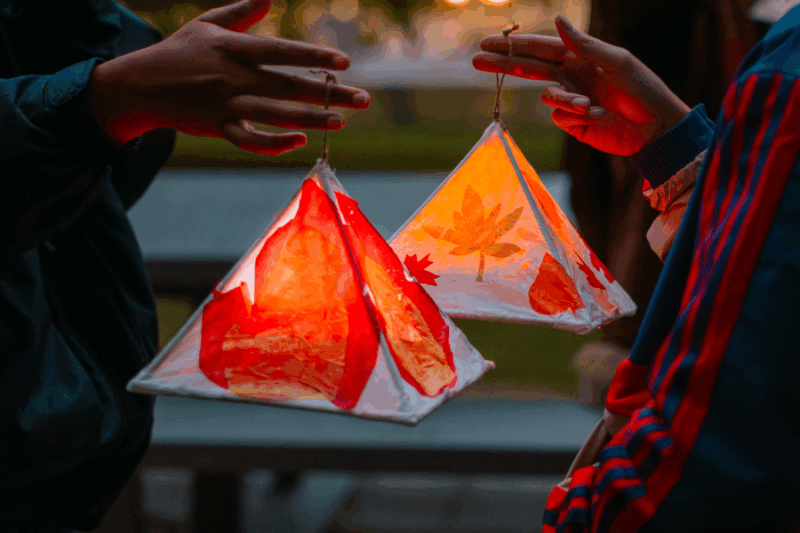
The two microparades Hannah hosted were integrated into other community events. The first, a bubble parade, took place on the more populated east side of the park and led people to a hidden area on the west, where the MacGregor Albert Community Association and Uptown West Neighbourhood Association hosted a celebration for an old oak tree. The second, a lantern procession at dusk, would follow a day-time lantern-making workshop, hosted by the artist Agnes Niewiadomski, and would invite participants to return to the park for a chance to parade their work, accompanied by student flutists from Wilfrid Laurier’s Faculty of Music. Later in the fall, inspired by the open-air karaoke she had experienced in Mauerpark in Berlin years earlier, Hannah challenged herself to host a more dynamic, audience-participatory event, which led to an afternoon of karaoke in the park.
Prior to these events, in the spring, Hannah hosted a Jane’s Walk in Waterloo Park, titled “Parks: Places for Encounter,” wherein she discussed with participants her OCC project and her concerns with park programming. Hannah combined her learnings from the OCC project with inspiration from connecting further with Park People and hearing about their work, and from the City of Toronto’s No Fee Community Activation Permits, to critically assess the needs of the City of Waterloo.
Over the course of the project, Hannah formed partnerships with the MacGregor Albert Community Association, Agnes Niewiadomski (Mindful Makers), and members of the Uptown West Neighbourhood Association to apply for and secure additional funding through TD Park People Grants. Over the year, she was grateful to have been able to connect with community leaders, including the Mayor of Waterloo, Dorothy McCabe, the head of the Waterloo Region Community Foundation, Eric Avner, as well as a local park-focused volunteer group (Friends of Waterloo Park), all of whom she was able to share her vision for the project and the park community. At the end of her project, Hannah spoke as a delegate to the City Council of Waterloo to share her project experiences and advocate for changes to promote small-scale cultural programming. She intends to continue this advocacy throughout 2026 as the City of Waterloo revisits its park plan.
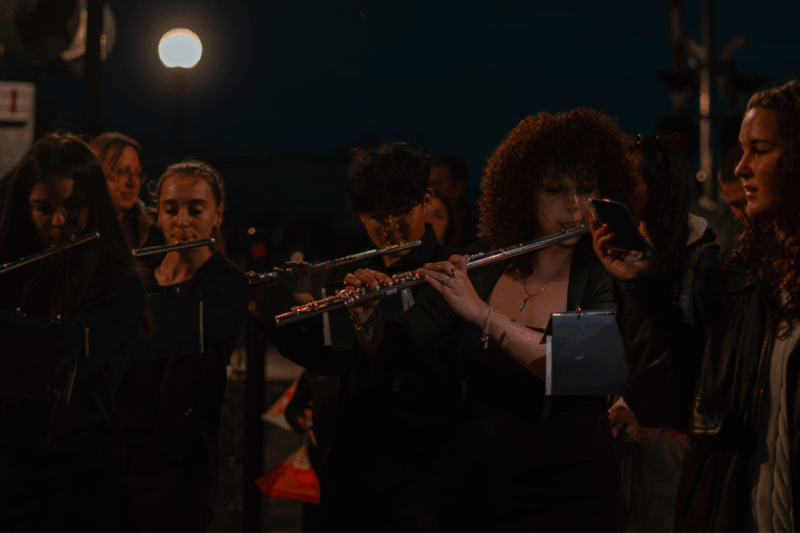
In total, more than 60 people participated in the lantern procession and bubble parade. Additionally, the events directly reached more than 250 community members and provided paid work experience for 10 emerging artists and cultural workers. Hannah is hopeful that her ongoing advocacy will allow this project to continue to impact others in the years to come.
Hannah was drawn to the OCC program for the opportunity to build a network of peers and established community leaders in Ontario with whom she could share ideas, learn from, and collaborate. The workshops underscored the importance of relationship-building, partnership development, and building a broad network of support. As someone with a more demonstrative leadership style – working independently to take risks and action, thereby showing others what’s possible to do – Hannah’s experience encouraged her to seek out future opportunities to work more intentionally with partners throughout the entire planning process to explore more collective leadership practices. This experience not only enabled Hannah to expand her network with Changemakers and others in 8 80 Cities’ network, but also gave her the opportunity to work with and connect with new people in Waterloo Region, thereby bringing new funding and programming to the region.
At the moment, Hannah feels strongly compelled to take a break from cultural organizing, but unfortunately feels equally compelled to direct an inaugural Hot Magnolia Festival next spring, celebrating the understated but gorgeous cousin of the more showcased spring cherry blossom tree. Should the magnolias win this battle (and she secures funding), the festival will take place whenever the magnolias bloom.
An ideal community is many things: a bit rambunctious, welcomely unexpected. It should have a memory of itself that imagines and re-imagines constantly the possibility of what it could be.
About Hannah Gardiner
Hannah Gardiner is a writer and cultural organizer from Kitchener. She has a master’s degree in literary studies from the University of Waterloo. Hannah has directed a range of independent and collaborative community projects, supported by 8 80 Cities & the Balsam Foundation, the City of Waterloo, Park People & TD Bank, and the City of Kitchener. As an Ontario Community Changemaker, Hannah continued to creatively explore ways to bring people together through shared experiences in Waterloo Park.
Instagram: @hannahadeline_
#microparade #community