
The Lingkha (Tibetan Greenspace Project)
Rignam Wangkhang
Etobicoke
Rignam’s project began as an effort to transform an unused hydro corridor in South Etobicoke into a meaningful outdoor gathering place for the Tibetan-Canadian community. As Rignam advanced the proposal, the project gained momentum with volunteers signing up, community leaders expressing strong support, and the Tibetan Canadian Cultural Centre committing to stewardship. Alongside this mobilization, he learned to navigate long municipal timelines, shifting political priorities, and the need to adjust the project to keep it moving. The year became an exercise in community building, patience, and proving that advocacy can create real pathways for change.
A Year of Community Mobilization
The Tibetan Greenspace Project aims to transform a 16,000-square-metre hydro corridor across from the Tibetan Canadian Cultural Centre into an accessible greenspace. The Tibetan-Canadian community in Toronto lacks outdoor gathering spaces that reflect its cultural identity. This empty corridor, surrounded by industrial sites, offered an opportunity to create a place where the community could gather, where children could play, and where cultural events could take place outdoors.
This past year, the project’s most significant impact has been community mobilization. By sharing the vision at large Tibetan gatherings and consulting with community leaders, Rignam helped show that the community’s needs matter and that advocacy can create real pathways for change. Volunteers stepped forward, leaders engaged seriously with the proposal, and the Tibetan Canadian Cultural Centre committed to partnership and stewardship. The response confirmed the community’s readiness to organize around shared infrastructure needs.
There’s genuine hunger for community-owned space.
People responded not just because they wanted a park, but because they wanted a space that genuinely felt like theirs. The community also showed a deep understanding of long timelines. When we explained the pivots and delays, the response wasn’t frustration; it was “What do you need from us to keep going?”
The project faced significant challenges. The City of Toronto’s approval process moved slowly, and Hydro One’s regulations were more restrictive than expected. The team originally envisioned a full linear park with programming space, but ultimately had to pivot to a walking trail application based on what was feasible under hydro corridor constraints. Two major setbacks followed: Councillor Amber Morley shifted her focus to a different hydro corridor, and a private entity announced plans to install a parking lot on part of the proposed site.
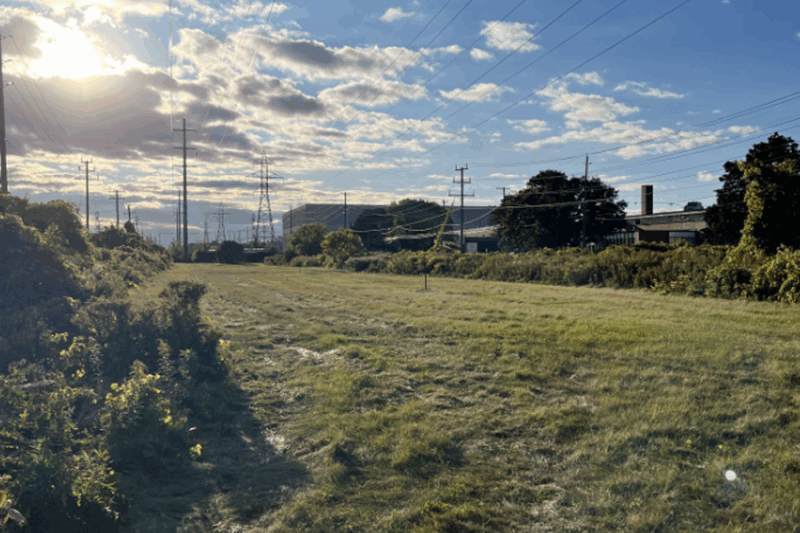
Rignam responded by adapting. Rather than holding onto the original concept, he researched what was feasible, studied precedents such as The Meadoway, and repositioned the proposal to align with Toronto’s trail development strategy. The project is now in active conversations with the City about how it fits within the broader active transportation network.
Partnerships grew along the way. The Tibetan Canadian Cultural Centre is committed to stewarding the space, with support and guidance from Park People, 8 80 Cities, and TRCA. Councillor Morley provided help navigating city processes. Throughout the year, Rignam learned who held decision-making authority and who could provide resources, significantly expanding the stakeholder network.
As a community leader, Rignam discovered that he is more comfortable with ambiguity than he expected, but he often struggles with pace. Bureaucratic delays taught him that some obstacles require patience rather than intensity. His leadership style is rooted in research and preparation, building credibility through case studies and technical understanding. But he also learned that community members respond most strongly to emotional resonance, not just data.
Adaptation isn’t weakness; it’s how projects survive contact with reality.
Beyond the project, the broader impact was demonstrating that advocacy works. By taking the Tibetan Greenspace Project from concept to active municipal negotiations, he showed that Tibetan-Canadians can claim a place in Toronto’s infrastructure planning. Volunteers stepped forward not just for this project, but because they saw a model for organizing around other community needs.
Looking ahead, the next step is to secure a trail license from Hydro One through the City’s partnership. Once approvals are in place, the Tibetan Canadian Cultural Centre will take on stewardship. If conditions change, the project could expand beyond a walking trail, but the focus now is on delivering a tangible solution that reflects community needs within existing constraints.
Rignam’s ideal community doesn’t require you to explain yourself to belong. Practically, that means infrastructure reflects who actually lives there—not just who urban planners imagined 50 years ago. It means green space where Tibetan families can celebrate Losar outdoors without having to book a permit six months in advance or wonder whether the space “allows” that kind of gathering. It means seniors can walk to a park without crossing four lanes of traffic. It means children grow up seeing their culture reflected in public spaces, not merely tolerated.
But beyond physical infrastructure, it’s about decision-making power. Newcomers and marginalized groups aren’t just consulted after plans are drawn; they’re at the table when priorities are set, and budgets are allocated. Where “community engagement” isn’t a box to tick but an actual transfer of authority over local resources.
Emotionally? It feels like ease. You can show up as yourself—culturally, linguistically, and economically—without constantly translating or moderating to fit someone else’s idea of “community.” Where the default assumption is that you belong, and the systems are designed to support that, not test it.
The Tibetan Greenspace Project is a microcosm of that vision. It’s about claiming space and demonstrating that this community’s needs warrant municipal investment. One hydro corridor won’t transform Toronto, but it’s a proof point. It says: we’re here, we’re organized, and our kids deserve a place to play that isn’t an afterthought.
About Rignam Wangkhang
Rignam Wangkhang is a Tibetan-Canadian journalist and producer. After producing a radio documentary about his father’s escape from Tibet, he co-founded The Chyssem Project, a grassroots initiative to create a permanent archival record of the first Tibetans to arrive in Canada in the early 1970s. Rignam is a 2023 Civic Action DiverseCity Fellow and a University of Toronto Leading Social Justice Fellow. He is passionate about civic engagement and creating spaces for community dialogue.
Instagram: @rignam @thelingkha
LinkedIn: @Rignam Wangkhang
#publicspace