
Taste of Barrie: Community Through Cuisine
Nicholai A. Melamed
Barrie
Nicholai’s project aimed to document and promote the diverse range of local, independent food providers in a fast-growing city with limited community resources for newcomers. As the work evolved into an interactive map, Nicholai observed new collaborations among service providers, non-profit groups, and small business owners. The project is now a tool that reflects the city’s growing diversity while creating pathways for future community food programs.
A Year of Community, Cuisine, and Connection
Taste of Barrie: Community Through Cuisine is a project to document and promote the diverse variety of local, independent food providers in Barrie, Ontario. As of 2025, Barrie is a fast-growing city in Central Ontario with a significant influx of new residents but relatively few community resources and newcomer support services. An ongoing cost-of-living crisis has also made groceries increasingly difficult for all but the most privileged residents to afford. The primary goal of Taste of Barrie is to raise awareness of independent food providers, who often offer more accessible, affordable, and environmentally friendly grocery options, while also reflecting the city’s growing diversity.
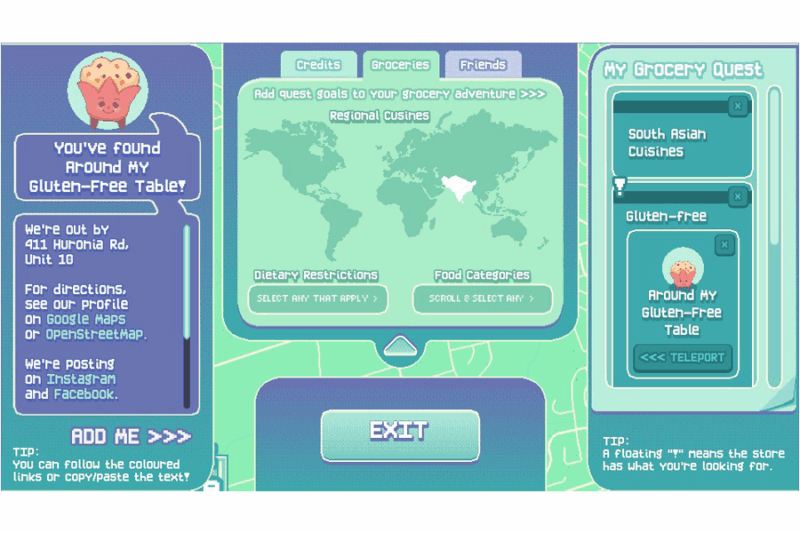
Many of the service providers and grocery stores contacted during this project were either unaware of one another’s existence or had limited ties. As the project evolved into an interactive digital map, the connections among service providers expanded as well. The project has opened doors for new collaborations between local service providers, non-profit organizations, and independent business owners. Nicholai expects to continue updating the map with new features as these connections develop into food programs.
This truly highlighted the way Barrie’s infrastructure and city planning have a hostile impact on the capacity of all residents to access basic necessities.
Over the past year, the process of finding and documenting the offerings and locations of local food providers made the city’s lack of walkability especially apparent. A significant portion of the project involved gathering information, which required visiting all 37 listed locations and many others that did not make the final list in person. This highlighted many of the barriers community service providers face in assisting vulnerable and low-income residents.
Barrie is a city built for cars, with long distances between walkable areas and very few places where community members can gather freely. As a disabled person who does not drive, Nicholai relied heavily on carpooling with friends and acquaintances to access remote business locations. This also highlighted that specific locations were almost completely inaccessible without a car, even with public transportation available.
Maintaining communication with small businesses was another challenge. Many were short-staffed, under-resourced, and had limited capacity to respond to inquiries outside their immediate work. The sheer number of locations also made it difficult to manage information with such a small project team. Ultimately, these challenges were addressed by extending timelines, shifting focus from print media to an interactive digital project, and commissioning a new production partner to assist with character art for the digital map.
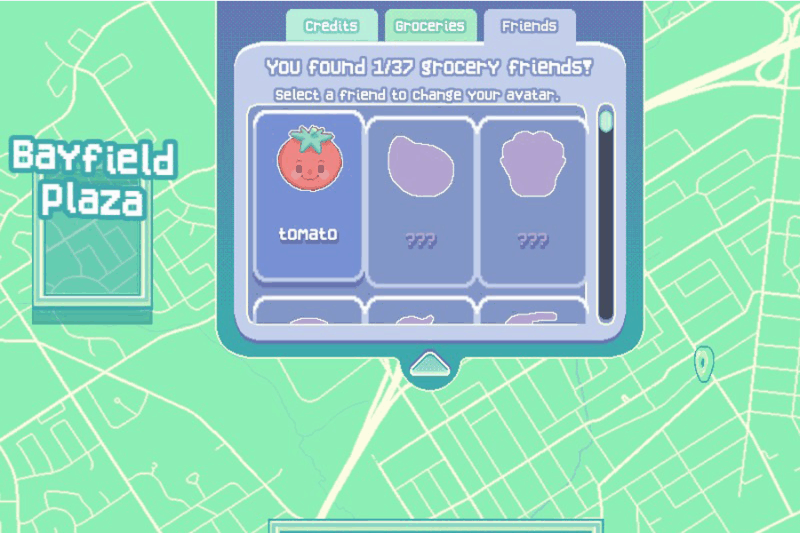
Throughout the project, Nicholai renewed pre-existing connections within local service provider networks and formed new connections with small business owners who previously had few ties to community organizations. Now that the interactive map has been released, they expect to continue maintaining and updating it, with the potential to include food programs, landmarks for newcomers, and interactive elements such as map-based mini-games.
As a community leader, Nicholai learned new ways to leverage existing connections from their grassroots organizing experience and developed their delegation skills as a developer who typically builds solo game projects. They contributed to building and strengthening new organizational networks within their community.
Food programs and accessible community events rely on strong connections between local food providers and community service organizations.
Without these connections, organizations typically fall back on corporate supermarkets. At the same time, small businesses struggle with visibility and face the ever-looming threat of closure when they are forced to compete with corporate giants. When the two nurture their relationship, they sustain one another’s survival, especially in a city where they face the shared challenge of hostile infrastructure and a conservative local government pursuing austerity policies.
About Nicholai A. Melamed
Nicholai A. Melamed (they/them) is a multidisciplinary artist, game developer, and community organizer. Many of their projects centre transgender immigrants on a path of reconciliation with the spaces they once called home. They speak to the interwoven topics of disability justice, sex-positive approaches to queer intimacy, and poverty alleviation viewed through an intersectional lens.
Nicholai has received grants from numerous organizations, including the York Region Arts Council, Qweerty, Pixelles, and the Ontario Community Changemakers Program. As of 2025, they have been admitted to the competitive GAMERella mentorship program for emerging game-makers. They are also an internationally published author and illustrator, with work featured in books with Microcosm Publishing, TO Comix Press, and Jessica Kingsley Publishers.
Instagram: @artofnamelamed
LinkedIn: @Nicholai Avigdor Melamed
Website (with interactive map): Taste of Barrie by N. A. Melamed ; Character artist: @astrallamb
#tasteofbarrie #supportlocalbarrie #artofnamelamed